
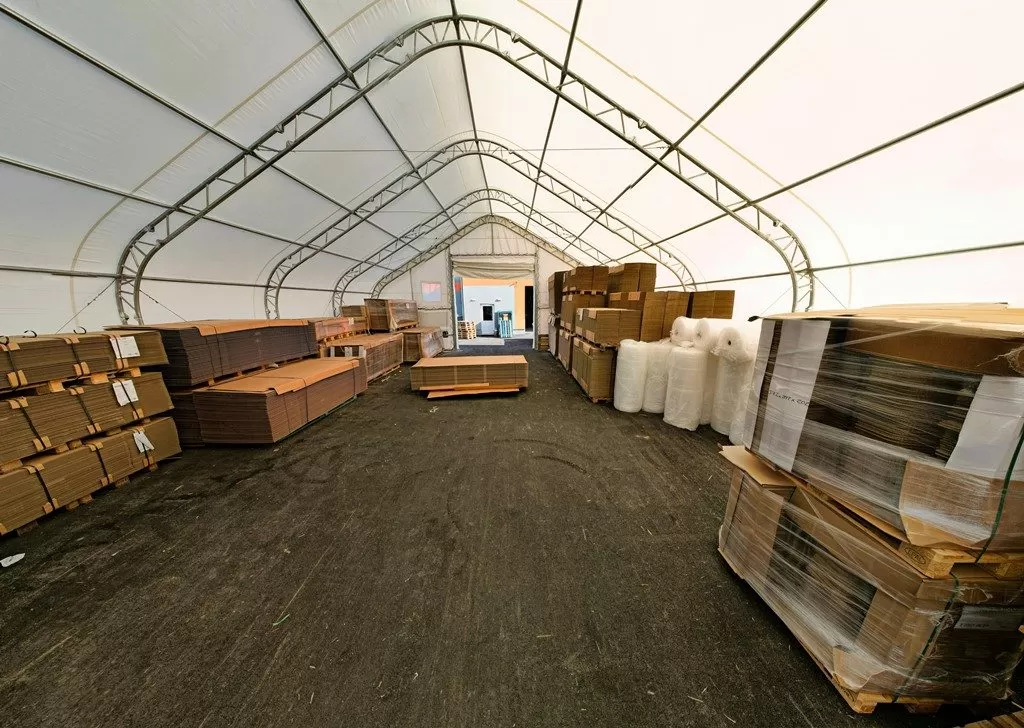
Choosing the right warehouse is not only a question of price or available floor space, but above all it is a question of matching the structure to the conditions of the plot, the use and the local regulations. The type of soil, snow loads, the intended use of the site and the planned lifespan have a huge impact on which model will work best. Before you decide on a particular design, it is worth summarising the most important factors that will determine the durability, safety and cost-effectiveness of your overall investment.
Wondering if you need foundations for a tent hall? Not right away. But... read more
One of the biggest advantages of tent halls is that there is no need to build permanent foundations. This saves time, money and paperwork. However, this doesn't mean that you can put it up on just any surface and forget about the issue. A poorly prepared ground can take revenge after the first downpour or strong winds. That's why it's worth taking the time to plan the area well - and have peace of mind for years to come.
In practice, it is crucial to have a stable, level and suitably hardened foundation to ensure the safety and durability of the structure. Even if you're not doing foundations, it's worth considering aggregate ballast, concrete slabs or ground reinforcement, especially if the site is prone to subsidence or heavy rainfall. In addition, for larger developments, it is worth checking the planning conditions for the storage hall beforehand to ensure that the location and planned parameters of the hall do not violate local regulations. This will help you avoid later formal problems and ensure that the construction is erected in accordance with the law.
On which plot of land can the warehouse be erected?
Start with the location. The hall needs a stable location, away from stagnant water and preferably on land that has already been used for industrial or agricultural purposes. The ground should be level or easy to level, and well drained - places that are waterlogged, have large differences in height or are constantly flooded are out. And it's not just about comfort, but above all about structural safety. Also check for trees with protruding roots, power poles or other infrastructure that may interfere with the hall.
It is equally important tocheck the designation of the land in the local zoning plan or to obtain the relevant zoning decision. It is these documents that determine whether it is legal to erect a storage hall for industry on a given plot of land and what parameters it must meet.
Do I need a permit for a tent hall? According to the regulations, buildings up to 35 m² in size which serve agricultural production and supplement the homestead development on a plot of land are exempt from both planning permission and notification (Article 29(2)(1) of the Construction Law). However, it should be borne in mind that the legislator has introduced a limit - a maximum of two such facilities may be built per 500 m² of plot area.
Hardening of the ground - when is it worthwhile and when is it an unnecessary expense?
Not every hall requires a perfectly hardened yard, but... it is worth considering. If you plan to use forklifts, store heavy machinery or simply want to keep things clean, a hardened area really does make a difference. More often than not, well compacted ballast or road aggregate will suffice - it's the cheapest and quickest option to implement. Concrete or reinforced concrete slabs offer more comfort and durability, but require more work. One thing is important: regardless of the material, the terrain must be perfectly level. Even slight tilting can disrupt the construction of the hall and make installation difficult.
Dimensions, diagonals and level - before you roll out the first tarpaulin
Before you drive the first anchor, you need to be sure that everything is correct. Check the ground level - preferably with a leveller or a good spirit level. Then measure the diagonals of the plot - they need to be identical if you want to avoid stretching the structure and having problems fitting the tarpaulin. You can't skip this step if you want a tight and stable hall. Anchor spacing? Always according to the assembly instructions for the specific model, no guesswork or "by eye".
In some locations, there may be restrictions on the height of the building, minimum distances from plot boundaries or permitted site functions.
A hall in winter? A few things you need to plan in advance
If the hall is also to stand in winter, you need to think about this in advance. First: the slope of the ground. Without it, rainwater and snowmelt will collect at the structure and wash away the ground. Second: driveways. If you have a gate entrance, the ground needs to be level to avoid door jamming or transport problems. Third: additional loads. In areas prone to windstorms - the south of Poland, open fields - it's worth adding ballast in the form of concrete blocks.
Planning to store grain, mulch or fodder? Make sure you have stable walls
For bulk materials such as grain, maize or meal, boxes made of concrete blocks or slabs work well. You can simply set them up inside the hall as partitions. This not only protects the goods, but also makes it easier to keep things tidy. Importantly, this construction does not affect the stability of the hall as long as it is placed correctly. Halls and storage tents for agriculture are also a good choice.
Build it once, but build it with care - and you'll have it for years to come.
A plot of land without foundations is a huge advantage, but only if you approach the subject sensibly. Properly prepared land is not a luxury - it is a prerequisite for a hall that is safe, durable and actually ready for use. Before ordering a structure, check your site, inquire about installation requirements and make sure that everything can be sensibly prepared. A tent hall can last for many years - but only if it is erected on well-prepared ground.
Preparation of the ground is the absolute basis, which in practice determines the durability of the entire investment. It is the right ground conditions that determine whether the structure can withstand strong gusts of wind, intensive rainfall and daily operating loads. Therefore, before installation, it is advisable to carefully assess the condition of the plot, carry out any levelling or hardening work and make sure that all technical requirements are feasible to meet. A well-prepared site is an investment that pays off in the form of safety, stability and many years of trouble-free operation of the hall.
Which hall to build for your warehouse? Let us summarise!
- The hall does not require foundations, but a stable, level and well-drained foundation is necessary.
- The site for the hall should be free of obstructions: trees, roots, poles, installations and conflicting infrastructure.
- Structures of up to 35 m² on a habitat agricultural plot may be erected without permission and notification (with a limit of 2 structures per 500 m²).
- Hardening of the ground is advisable for intensive use, machine traffic or storage of heavy materials.
- Before installation , check the level, plot diagonals and anchor spacing according to the manufacturer's instructions.
- In harsh winter conditions, additional ballast, a suitable slope and proper driveways may be necessary.
- With loose materials, it is worth using block or concrete slab walls for safety and tidiness.
- A well-prepared site is a guarantee of durability, stability and trouble-free operation for many years.
If you are looking for a structure that is durable, safe and suited to the realities of your site, check out the range of halls and storage tents available at Inamiot.pl. From lightweight temporary halls to all-year-round structures suitable for intensive use, we have the models you need. Ideal to set up once and have for years.
 Previous
